

Before diving into the coherence analysis of policies, it is essential to map out and concretise the ocean related visions, objectives, and targets of the European Green Deal.
Many of the European Green Deal (EGD) interconnected policy objectives are focusing on tackling the thorny and urgent challenges concerning biodiversity, climate change, and pollution. That offers an opportunity to cluster its policy objectives in terms of the challenges they are targeting under the three streams of biodiversity, climate change and pollution.
Each stream focuses on specific goals for a sustainable future and aims to address the challenges and opportunities associated with them. While each of these streams appears to trigger a different bundle of policies and regulatory instruments, in practice, there are myriads of interconnections among them.
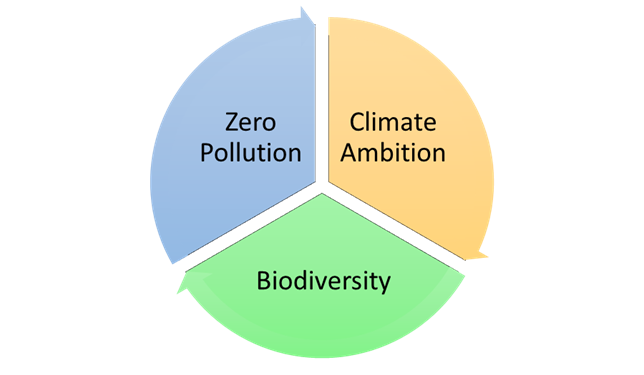
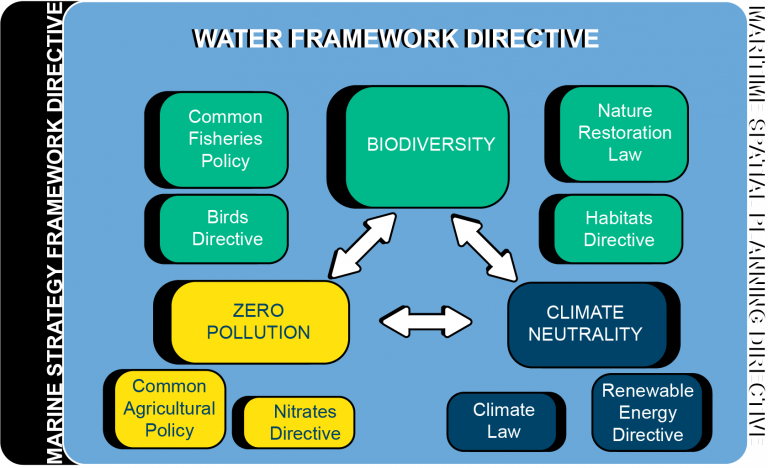
For each policy stream, CrossGov identified the EGD vision and the related EGD strategies.
These includes both direct and non-direct impact strategies. The direct strategies address the issues related to the marine environment, such as marine pollution, overfishing, ocean acidification, the production of marine renewable energy, and the regulation of use of energy sources at ports. Non-direct impact strategies address issues that have significant implications for the oceans, such energy generation, industrial emissions and agriculture.
As the three streams of the EGD do not exist nor operate in isolation, cross-cutting strategies were also identified to start visualising insights on where issues of coherence and cross-compliance might arise.
EGD related EU strategies
Cross-cutting EGD related strategies
EGD related EU strategies
Cross-cutting EGD related strategies
EGD related EU strategies
Cross-cutting EGD related strategies
The content provided has been extracted from the Deliverable 1.1 (Green Deal objectives and scenarios) of the CrossGov project.