

Below you will find a practical guidance for the organization of the coherence assessments. The guidance breaks down the coherence assessment into four phases, to ensure a shared focus on the selected EGD strategies and objectives as well as selected EU and (sub)national policies.
Determining the time frame of the assessment is important to clarify which versions of policies are being evaluated and which policies are included or excluded. For assessing cross compliance, it is also important to specify the time period within which progress/success of policy implementation is evaluated.
This is particularly important when evaluating regional frameworks like EU policies that are
implemented in spec ific national and sub national contexts.
For example: How does the degree of coherence across environmental and sectoral policies and governance levels affect progress towards achieving cross compliance with the selected EU EGD goals and target ?
To answer this overarching evaluation question, several sub-questions can be defined, for example:
Data collection methods
Specifically, the assessment will look at two elements of the coherence evaluation framework:
– Comparison of policy objectives against objectives of five key EGD strategies [e.g.
using a screening matrix]
– Mainstreaming : Do the policies explicitly state an intent to contribute to addressing
biodiversity, climate change and pollution (beyond their specific objectives)?
The objective is to assess whether policy design is likely to support horizontal coherence between the policies intended to deliver the EGD. Based on the assumption that coherence between policies supports effective, cross compliant implementation , horizontal incoherence can negatively affect policies’ vertical coherence with the EGD.
Where are key coherence issues? What is causing (in)coherence? What are the implications for the individual policies’ contributions to delivering the EGD?
The assessment can involve:
Coherence in national transposition can be assessed in two steps:
The objective is to understand how strategic plan s prepared according to national transposition of the WFD, MSFD and MSPD affect coherent and effective policy implementation towards multiple EGD goals and targets.
The objective is to understand how mainstreaming of environmental/biodiversity related aspectsinto sectoral decision making does/can affect coherent and effective policy implementation towards multiple EGD objectives.
How does the degree of coherence across environmental and sectoral policies and governance levels affect progress towards achieving cross-compliance with the selected
EGD goals and targets?
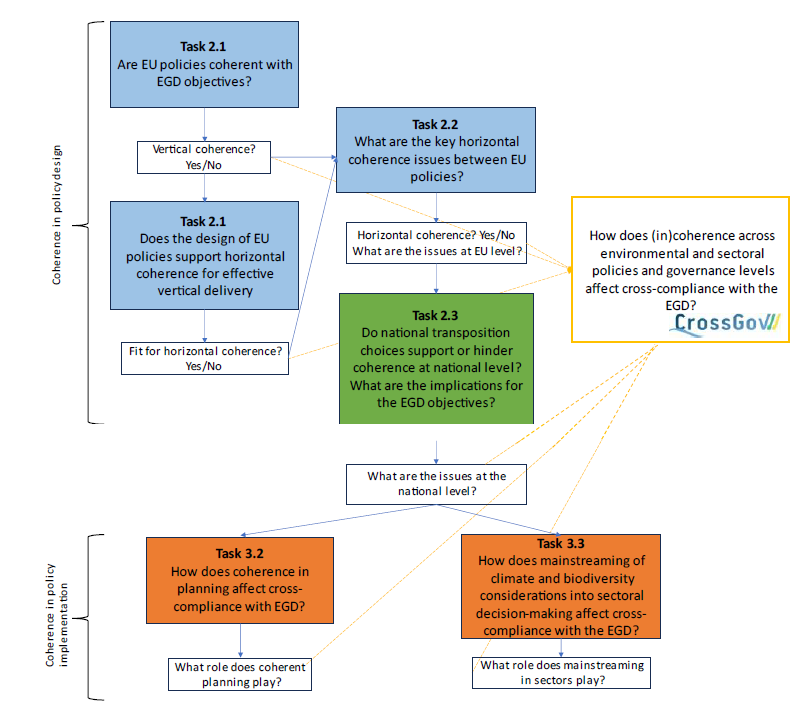
The objective is to understand how coherence across environmental and sectoral policies and governance levels affects progress towards achieving cross-compliance with the selected EU EGD goals and targets. To understand which elements of policies are causing barriers to coherence and/or cross-compliance. To understand at which governance level(s) and phases of the policies’ life cycles, coherence and cross-compliance challenges mostly emerge and where they can be best mitigated.
The methodology can be applied in a flexible way to different context. For this, an inception phase is needed, to define the scope of the analysis and the following steps.
Defining:
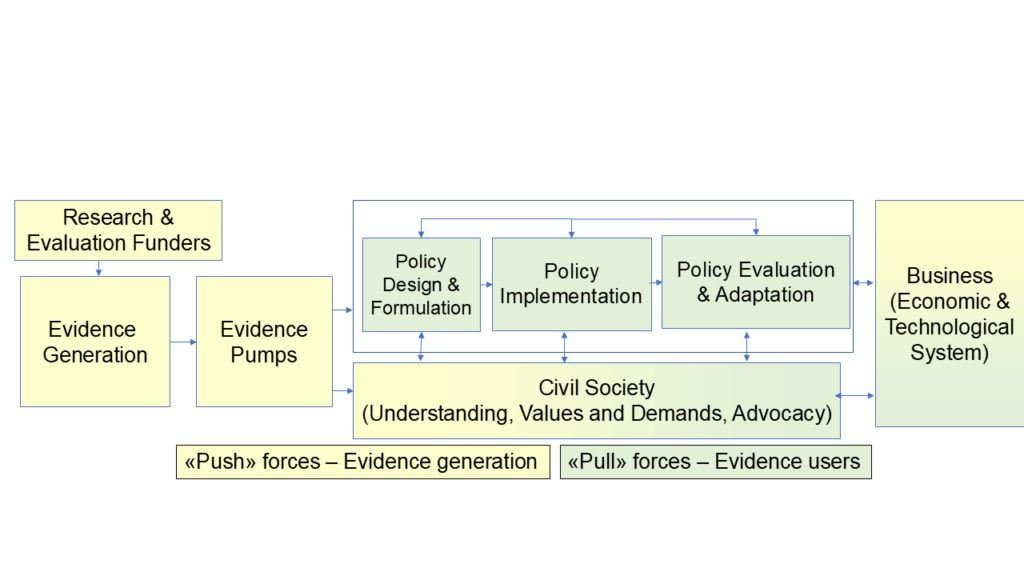
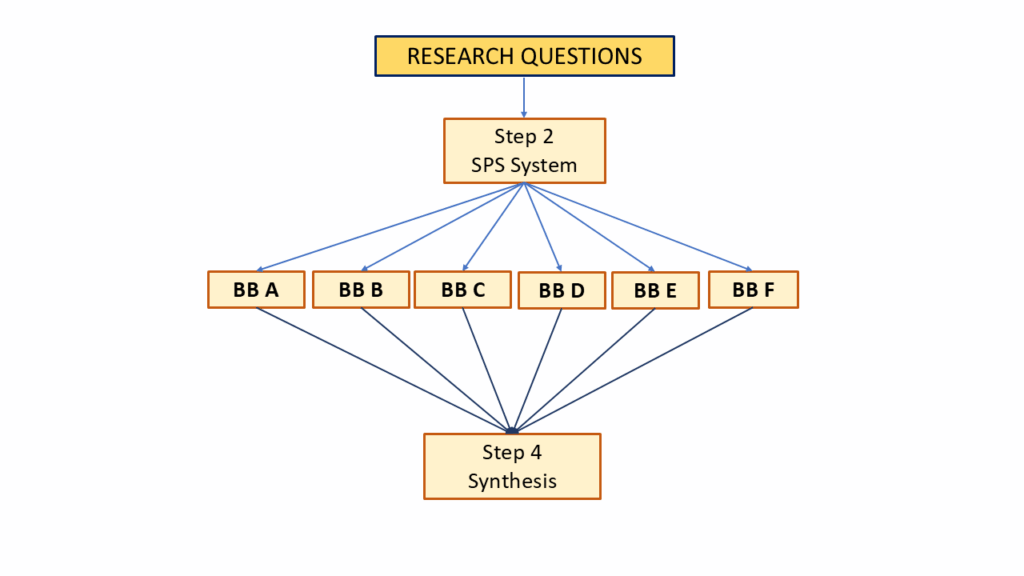
At the core of the analytical framework and the operational procedure to analyse SPSIs are the 6 Building Blocks introduced earlier.
The analysis of Building Blocks and their attributes shall consider spatial scales and phases of the policy cycle, as also defined in step 1.
Spatial elements can be relevant in the analysis from different perspectives. On one side, local scale data is necessary to understand and manage larger scale processes, pressures and impacts; on the other, policy-makers often need to be able to understand local impacts of larger scale issues, and how mitigative and adaptive strategies enacted at one scale can constrain or benefit actions at other scales.
Challenges for policy-makers might relate to the need to match (1) the scales of bio-geophysical systems and management systems, (2) the scales of assessments and management systems, and (3) understanding the linkages between scales and their consequences for decision-making (Cash, 2000). Moreover, the analysis can reveal significant differences in how SPSIs work in different environments, countries or sea basins, which can be of real added value to the analysis.
All key phases of the policy cycle are informed by SPSIs. Such phases are not hermetically isolated from one another: relevant processes are usually not linear but highly iterative, with phases continuously shaping each other (Van den Hove, 2007). Nevertheless, it is important to consider at which phase and how an SPSI intervenes.
In the policy design and formulation phase, issues requiring action are first detected. This can depend, for example, on newly available scientific input, impactful events, or societal transformations.
Then, it is defined how the policy is being structured, what its objectives and expected effects are, the resources that need to be used. Stakeholders may be involved at this stage, and evidence-based solutions are required.
The Implementation phase requires responsible entities and available resources to turn decisions into actions while ensuring monitoring provisions are met.
Evaluation and Adaptation (or Maintenance) refer respectively to the assessments of the degree of success of the policy and of its implementation and to the confirmation, revision, or dismissal policy phase (Cairney, 2016).
2. What type of knowledge is currently provided and used in the different formulation and implementation stages?
3. Which role does science play in planning, policy-making and decision-making?
4. How is knowledge contributing to horizontal and vertical coherence and cross-compliance of policies?
For a practical example of application of the Policy Coherence framework and the SPSI framework, you can read the following report from the Mediterranean Case Study. The study uses both frameworks to evaluate the current state of play in
coherence and cross-compliance within the relevant case study area.
The process is designed to be flexible, allowing for the selection of attributes most relevant to the specifics of the case study, while a set of guiding questions and a standardized template help structure the analysis.
Cash, D., 2000. Linking Global and Local Scales: Designing Dynamic Assessment and Management Processes. Global Environmental Change 10, no. 2: 109–20. https://doi.org/10.1016/S0959-3780(00)00017-0.
Cairney, P, 2016. The Politics of Evidence-Based Policy Making. London: Palgrave Macmillan UK. https://doi.org/10.1057/978-1-137-51781-4.
Van Den Hove, S., 2007. A Rationale for Science–Policy Interfaces’. Futures 39, no. 7: 807–26. https://doi.org/10.1016/j.futures.2006.12.004.