Norway: A Newcomer with Potential
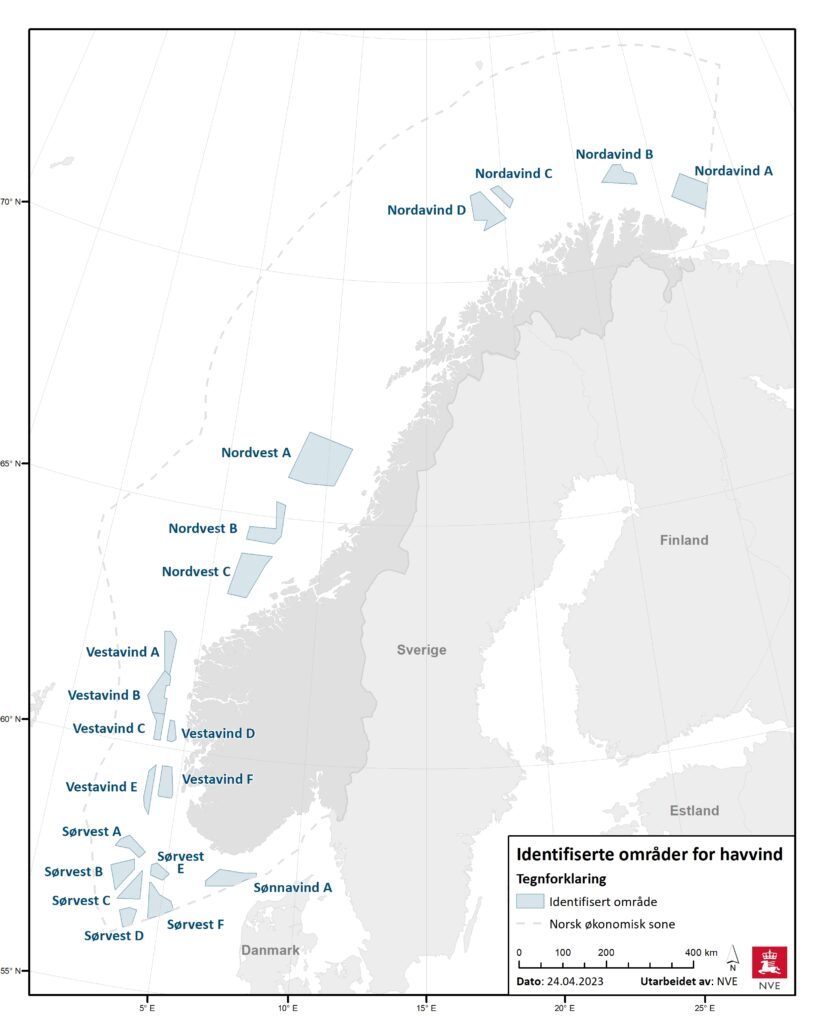
Norway, a relative newcomer to offshore wind, awarded its first 1.5 GW capacity area in March 2024, with plans for 30 GW by 2040.
The country’s approach is still evolving, focusing on:
1. Selecting areas with optimal wind conditions, technical suitability, minimal environmental conflicts, and minimal conflicts in fisheries
2. Utilizing mandatory Strategic Environmental Assessments (SEAs) to evaluate general and site-specific environmental impacts
3. Developing new legislation to protect areas beyond territorial waters Norway’s vast maritime areas and strong offshore expertise from its oil and gas industry position it well for future offshore wind development. However, the country faces challenges in balancing this new industry with its traditional fishing sector and pristine marine environments.
Central actors in the Norwegian OWE governance landscape
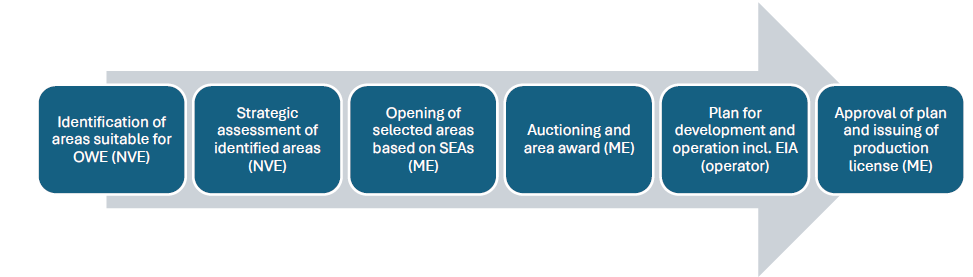
The incorporation of marine biodiversity knowledge into the OWE governance process.
Strengths and weaknesses of Strategic Impact Assessments
Norway’s approach to planning offshore wind energy (OWE) differs significantly from that of European Union Member States, where OWE is integrated into marine spatial plans under the Maritime Spatial Planning Directive. In Norway, the OWE planning process remains relatively sectorized, despite collaborative, interagency efforts in identifying areas and conducting Strategic Impact Assessments (SIAs). In Norway, SIAs play a crucial role in the early stages of governance, providing detailed information and serving as powerful tools in the initial stages. They are not merely legal “obligatory passage points” but are instrumental in balancing energy production with environmental and biodiversity objectives. By focusing on environmental impacts, SIAs often identify knowledge gaps, prioritize environmental considerations, and sometimes lead to the deferring or postponing of areas initially deemed suitable for offshore wind.
Alignment with integrated management framework
Although the assessment program stipulated that effects on nearby and/or overlapping valuable areas should be evaluated, the practical application of this guidance proved challenging. These valuable/vulnerable areas do not provide clear guidelines on which activities can take place and to what extent, unlike countries such as the Netherlands, where Natura 2000 areas are avoided in the designation of offshore wind areas.
Additionally, there is no consensus on what amount and what types of impacts are acceptable. This lack of agreement further complicates the integration of environmental considerations into the planning and decision-making processes for offshore wind energy projects, leading to uncertainties and potential conflicts in the assessment and management of these areas.
Cumulative & transboundary impacts
A key limitation of the SIA process is the difficulty in understanding cumulative impacts when assessments are conducted in isolation for individual areas. This can lead to an incomplete picture of the overall environmental and social consequences of multiple projects. For example, the cumulative impact on marine mammals, fish stocks, and benthic communities may be underestimated if each project’s assessment is conducted independently. The assessment program and guidance documents provide limited guidance on how to assess cumulative impacts. Through focus groups and interviews, three prevailing ways of understanding cumulative impacts have been identified:
- The cumulative impact of an offshore wind park over time.
- The cumulation of multiple pressures in an area (human activities, climate change, pollution).
- The cumulative effects of multiple offshore wind parks outside the assessed area.
The SIA guidance also emphasized that transboundary effects should be assessed in accordance with Offshore Energy Act. Transboundary impacts can also be interpreted in various ways, reflecting the complexity of assessing impacts that cross boundaries. One interpretation focuses on transboundary effects outside the assessed area but within the same jurisdiction, while another considers transboundary effects over jurisdictional boundaries. Both interpretations are relevant for an ecosystem-based approach to OWE development, and for reconciling biodiversity and offshore energy objectives.
Limited use of the mitigation hierarchy
While SEAs and SIAs are crucial for assessing and mitigating the impacts of OWE projects, they often focus on immediate impacts and mitigation measures, overlooking broader environmental goals such as restoration and nature inclusive designs. The mitigation hierarchy is gaining traction in environmental policies, including offshore wind policies (Bennun et al., 2021), and employs a sequential approach to managing biodiversity impacts of human activities. It starts by:
- avoiding harm whenever possible
- addressing the mitigation of unavoidable impacts such as noise.
- involving the restoration of affected areas
- offsetting impacts through compensatory measures.
The mitigation hierarchy is often not systematically integrated into the planning of offshore wind developments. While the guidance documents for the Norwegian SIAs do not comprehensively address the mitigation hierarchy, it is used in the thematic assessments on impacts on birds and benthic habitats.
The extent to which the mitigation hierarchy is addressed in offshore wind planning differs strongly between countries (Nordic Energy Research 2022). Integrating these broader objectives into the SEA/SIA framework is challenging but necessary. SEAs could be expanded to more systematic considerations for the restoration and enhancement of marine ecosystems, ensuring that OWE development not only minimizes harm but also contributes positively to the environment. This would require a shift in the current approach, incorporating long-term ecological benefits and promoting a more holistic, ecosystem-based management strategy.
References
Bennun, L., Van Bochove, J., Ng, C., Fletcher, C., Wilson, D., Phair, N., & Carbone, G. (2021). Mitigating biodiversity impacts associated with solar and wind energy development: Guidelines for project developers.
Nordic Energy Research (2022). Accommodating Biodiversity in Nordic Offshore Wind Projects